|
|
|
|
|

Review Page (edit) |
Nominated by:
Tisha Mukherjee (talk) on 2025-11-12 16:53 (UTC) |
Scope:
Spilopelia chinensis (Spotted Dove) - on erythrina variegata |
- Per COM:VIS, the general rule is one scope per species. However, it is allowed that “for some well-known species, sub-scopes may be proposed to illustrate a specific aspect of behaviour as long are they are relevant for Wikimedia projects”. Sub-scope examples given are “male versus female if identifiable”, “single versus group”, "eggs", "juvenile", "hunting", "mating", "hatching", "flying", "albino"...
- By my estimate, there are about 50 valid VI scope with optional sub-scope combinations for any animal, bird, insect or similar critter that would be in keeping with the COM:VIS guidelines on scope.
- However, when you add a second species, the scope becomes both confusing (which species is being nominated here?) and too narrow. The inclusion of a second species in the scope is a descriptive element unique to your image that makes the scope too narrow and not “a generic field or category within which the image is the most valuable example”.
- You have a good image. It's just the wording of the scope that needs some work. My suggestion on a path forward is to look at your image and find one of the 50 scope/sub-scope combinations that would be acceptable (aka "just right") --GRDN711 (talk) 05:57, 16 November 2025 (UTC)[reply]
- Sorry but this is untrue. The current practice on VIC is to accept a second species in the scope for birds/insects. Here are some examples: 1, 2, 3, 4, 5, 6, 7, 8, 9, 10, 11, 12, 13, 14, 15, 16, 17, 18, 19, 20, 21, 22, 23, 24, 25, 26, 27, 28, 29, 30, 31, 32, 33, 34, 35, 36, 37, 38, 39, 40, 41, 42, 43, 44, 45, 46, 47, 48, 49, 50, 51, 52, 53, 54, 55, 56, 57, 58, 59, 60, 61, 62, 63, 64, 65, 66, 67, 68, 69, 70, 71, 72, 73, 74, 75, 76, 77, 78, 79, 80, 81, 82, 83, 84, 85, 88, 89, 90, 91, 92, 93, 94, 95, 96, etc.
- I therefore see no problem with the current scope which is perfectly in line with the current practice on VI. -- Giles Laurent (talk) 19:45, 18 November 2025 (UTC)[reply]
- Giles, you make the claim that out of 55,026 VI images, 96 errant examples of scopes found to have double species, defines the rule of how a scope should be written. That is not the case.
- What you never provide is any reference to the VI guidelines in COM:VIS for how scopes should be written, because it states the exact opposite of your claim.
- Right near the top, in defining what is too narrow a scope, COM:VIS clearly states that:
"...some mouldy nectarines in a fruit bowl" would not be acceptable: it is too narrow and is more a description of the image than a generic field or category. It is unlikely that anyone would want to use that phrase as the basis of an image search. There is no point in mentioning the bowl at all, as that merely serves to limit the scope to a peripheral feature which is really not part of the generic concept illustrated by the image.”
- Sorry, Tisha, as an example, I am going to use your scope of Spilopelia chinensis (Spotted Dove) - on erythrina variegata.
- In the COM:VIS guidance on what is too narrow, Spilopelia chinensis (Spotted Dove) is the “mouldy nectarines” and the second species, erythrina variegata, is the “fruit bowl”. Clearly stated, scopes with double species are too narrow.
- Further Giles, scopes that combine a species with extra descriptive detail such as “each different plant or tree a bird or insects is sitting on", would also be too narrow.
- I am quite willing to have further discussion and seek consensus at Commons talk:Valued images, but to me, COM:VIS clearly states that scopes with double species and similar extra description are too narrow. --GRDN711 (talk) 06:02, 19 November 2025 (UTC)[reply]
|
| Open for review. |
|

Review Page (edit) |
Nominated by:
Tisha Mukherjee (talk) on 2025-11-12 17:00 (UTC) |
Scope:
Pycnonotus cafer (Red-vented Bulbul) - on erythrina variegata |
- Sorry but this is inaccurate. The current practice on VIC is to accept a second species in the scope for birds/insects. Here are some examples: 1, 2, 3, 4, 5, 6, 7, 8, 9, 10, 11, 12, 13, 14, 15, 16, 17, 18, 19, 20, 21, 22, 23, 24, 25, 26, 27, 28, 29, 30, 31, 32, 33, 34, 35, 36, 37, 38, 39, 40, 41, 42, 43, 44, 45, 46, 47, 48, 49, 50, 51, 52, 53, 54, 55, 56, 57, 58, 59, 60, 61, 62, 63, 64, 65, 66, 67, 68, 69, 70, 71, 72, 73, 74, 75, 76, 77, 78, 79, 80, 81, 82, 83, 84, 85, 88, 89, 90, 91, 92, 93, 94, 95, 96, etc.
- I therefore see no problem with the current scope which is perfectly in line with the current practice on VI. -- Giles Laurent (talk) 19:47, 18 November 2025 (UTC)[reply]
.svg/20px-Pictogram_voting_comment_(orange).svg.png) Comment See response at Spotted Dove in Tabakoshi April 2025 by Tisha Mukherjee 01.jpg - --GRDN711 (talk) 06:05, 19 November 2025 (UTC)[reply] Comment See response at Spotted Dove in Tabakoshi April 2025 by Tisha Mukherjee 01.jpg - --GRDN711 (talk) 06:05, 19 November 2025 (UTC)[reply]
|
| Open for review. |
|

Review Page (edit) |
Nominated by:
Tisha Mukherjee (talk) on 2025-11-13 06:30 (UTC) |
Scope:
Argya malcolmi (Large grey babbler) - on lantana camara |
- I don't think the scope is too narrow. It is a common practice on VI to include the specific name of a tree or plant that a bird or an insect is sitting on (recent examples: 1, 2, 3, 4). This means that there can be several different VI scopes for each different plant or tree a bird or insects is sitting on. -- Giles Laurent (talk) 13:44, 13 November 2025 (UTC)[reply]
- Comment Giles Laurent, it appears we see things quite differently on this point. IMO, you have put together a small but fine collection of images with VI ratings that have slipped through with scopes that in citing two speciesm are "too narrow". It is not common practice to do this and a few examples do not change the VI guidelines.
- Per COM:VIS "...a scope is not a simple description of your image. Rather, it defines a generic field or category within which your image is the most valuable example".
- How valuable can a VI rating be if you can have one "for each different plant or tree a bird or insects is sitting on"? Every image has a descriptive element in it that is different from any other. Just having layers of detail doesn't make the image a valued image in Commons.
- It is not the intention of this VI forum and review to hand out VI ratings like candy. It must be a good image nominated within a defined scope that is not too wide; not too narrow; just right. - -GRDN711 (talk) 08:25, 16 November 2025 (UTC)[reply]
- @GRDN711 Sorry but these are not just some "slip through" but just perfect examples of the current practice on VI. Since you want more links, here are some more: 1, 2, 3, 4, 5, 6, 7, 8, 9, 10, 11, 12, 13, 14, 15, 16, 17, 18, 19, 20, 21, 22, 23, 24, 25, 26, 27, 28, 29, 30, 31, 32, 33, 34, 35, 36, 37, 38, 39, 40, 41, 42, 43, 44, 45, 46, 47, 48, 49, 50, 51, 52, 53, 54, 55, 56, 57, 58, 59, 60, 61, 62, 63, 64, 65, 66, 67, 68, 69, 70, 71, 72, 73, 74, 75, 76, 77, 78, 79, 80, 81, 82, 83, 84, 85, 88, 89, 90, 91, 92, 93, 94, 95, 96, etc. -- Giles Laurent (talk) 19:40, 18 November 2025 (UTC)[reply]
- Comment See response at Spotted Dove in Tabakoshi April 2025 by Tisha Mukherjee 01.jpg - --GRDN711 (talk) 06:06, 19 November 2025 (UTC)[reply]
- @GRDN711: As animals do not visit random plants this scope is considered valid and that's why I use it. I am participating here may be for just few months but you people are far more experienced I believe, so please decide if it is a valid scope or not. I have no intention of bending rules. I get to learn a lot from here that's why I participate. Thank you - Tisha Mukherjee (talk) 09:02, 17 November 2025 (UTC)[reply]
- Comment Sorry Tisha, I respectfully disagree with your statement - "As animals do not visit random plants this scope is considered valid...". Birds perch on any plant or structure that can hold their weight. They also poop on anything and anyone. They may have some preference for food sources but this bird is perching, not eating. Even then, it would be the rare case where a bird would be limited to a single plant as a food source (not good for survival of the species).
- If you take out the second plant species from the scope and have no other characterstic bird behavior to offer as sub-species, then you are left with a VI claim that this image is the best and therefore most valuable, of this species.
- I don't know if this is the case but if you change your scope to just the species, I will review it on that basis. --GRDN711 (talk) 07:47, 18 November 2025 (UTC)[reply]
- @GRDN711: I do have a lot of respect for you and also for those who have chosen to support. I would love them to participate in the discussion and come to a conclusion weather this scope should be used or not. Thank you - Tisha Mukherjee (talk) 09:44, 18 November 2025 (UTC)[reply]
- @Tisha Mukherjee: There is no consensus on this issue but I have made my case above that inclusion of a second species in the scope is too narrow and contrary to the COM:VIS guidelines. It will likely continue to be a contemntious issue. Right now, your VI nom status is two votes for support to one oppose. --GRDN711 (talk) 18:40, 18 November 2025 (UTC)[reply]
|
| Open for review. |
|
|
|

Review Page (edit) |
Nominated by:
Brihaspati (talk) on 2025-11-13 08:50 (UTC) |
Scope:
Malayopython reticulatus (Reticulated python) |
- @Archaeodontosaurus: Check the updated scope please. --Brihaspati (talk) 08:59, 14 November 2025 (UTC)[reply]
 Support OK now --Archaeodontosaurus (talk) 13:00, 14 November 2025 (UTC)[reply] Support OK now --Archaeodontosaurus (talk) 13:00, 14 November 2025 (UTC)[reply]- Regretfully
 Oppose Oppose
- It's your call, but you could make the wider VI claim that this is the best and most valuable image at Commons of the "Malayopython reticulatus (Reticulated python)" species, or perhaps more limiting "Malayopython reticulatus (Reticulated python)" species - museum specimen. --GRDN711 (talk) 18:19, 16 November 2025 (UTC)[reply]
- @GRDN711: I have updated the category as per your suggestion. FYI @Archaeodontosaurus: , since you also voted. --Brihaspati (talk) 08:42, 17 November 2025 (UTC)[reply]
- @Brihaspati: A cross-out is not best practice in VI as the scope as written becomes part of the record for the VI nomination. You as nominator should go in and edit the scope to exactly what you want it to be reviewed as. --GRDN711 (talk) 07:10, 18 November 2025 (UTC)[reply]
- @GRDN711: changed the scope and removed cross-out. --Brihaspati (talk) 08:55, 18 November 2025 (UTC)[reply]
|
| Open for review. May be closed as Promoted if the last vote was added no later than 06:14, 17 November 2025 (UTC) |
|
|
|
|
|
|
_Dysmachus_trigonus_on_Dianthus_caryophyllus.jpg/250px-(MHNT)_Dysmachus_trigonus_on_Dianthus_caryophyllus.jpg)
Review Page (edit) |
Nominated by:
Archaeodontosaurus (talk) on 2025-11-14 06:04 (UTC) |
Scope:
Dysmachus trigonus male on Dianthus caryophyllus. |
- I don't think the scope is too narrow. It is a common practice on VI to include the specific name of a tree or plant that a bird or an insect is sitting on (recent examples: 1, 2, 3, 4). This means that there can be several different VI scopes for each different plant or tree a bird or insects is sitting on. -- Giles Laurent (talk) 06:52, 14 November 2025 (UTC)[reply]
- Comment @Giles Laurent: , I believe that common practice is wrong and pointless, look here: Commons:Valued_image_scope/en#Animals. sub-scopes may be proposed to illustrate a specific aspect of behaviour – not specific background. Fly can sit on every species in its environment so we should create 1000-2000 scopes for it? --Gower (talk) 07:16, 14 November 2025 (UTC)[reply]
- I believe the current practice makes sense because the plant or tree is a valuable information about the animal's environment, which is also a reflector of the behavior of the animal/insect that will prefer some environments to others. So to me this is perfectly fine with the rules -- Giles Laurent (talk) 20:01, 14 November 2025 (UTC)[reply]
- Comment @George Chernilevsky: of course that animals have their feeding plants etc. but not always. I also photograph insects and it varies, sometimes certain plants have significance, and sometimes it's a coincidence. --Gower (talk) 18:53, 14 November 2025 (UTC)[reply]
- Good image but regretfully Oppose based on scope. The inclusion of second plant species with this insect species is overly descriptive and narrow. This insect feeds on other insects and can be found on a number of different plants, not specifically this plant species. Also, common name of "fan-bristled robberfly" should be included. Suggest you consider a better scope for further consideration. --GRDN711 (talk) 19:05, 16 November 2025 (UTC)[reply]
- Sorry but your own interpretation of VI rules is inaccurate in my opinion and is contrary to the current practice on VI which allows to add a plant species alongside a bird/insect species. Here are some examples: 1, 2, 3, 4, 5, 6, 7, 8, 9, 10, 11, 12, 13, 14, 15, 16, 17, 18, 19, 20, 21, 22, 23, 24, 25, 26, 27, 28, 29, 30, 31, 32, 33, 34, 35, 36, 37, 38, 39, 40, 41, 42, 43, 44, 45, 46, 47, 48, 49, 50, 51, 52, 53, 54, 55, 56, 57, 58, 59, 60, 61, 62, 63, 64, 65, 66, 67, 68, 69, 70, 71, 72, 73, 74, 75, 76, 77, 78, 79, 80, 81, 82, 83, 84, 85, 88, 89, 90, 91, 92, 93, 94, 95, 96, etc.
- I therefore see no problem with the current scope which is perfectly in line with the current practice on VI. -- Giles Laurent (talk) 19:51, 18 November 2025 (UTC)[reply]
|
| Open for review. |
|
|
|
|
|
|
|
|
|
|
|
|
|
|
|
|
|
|
|
|
|
|

Review Page (edit) |
Nominated by:
Tisha Mukherjee (talk) on 2025-11-15 17:03 (UTC) |
Scope:
Calidris temminckii (Temminck's Stint) - wing-spreading |
- Comment I wouldn't consider stretching to be a valuable scope and the English usage is technically unsound. Charlesjsharp (talk) 20:57, 15 November 2025 (UTC)[reply]
- Comment Agree with Charles that "stretching" is not the right sub-scope term. I also hesitate to add even more bird sub-scopes to an already large collection but I think this bird is engaging in characteristic behavior as described here:
- "Birds engage in sunbathing or wing-spreading to regulate body temperature and optimize feather maintenance, which involves spreading preen oil, controlling parasites, and boosting their immune system."
- If the bird was wet, the right sub-scope term could be "sunbathing" to dry their feathers. Here, this dry bird seems to be engaging in "wing-spreading" for the health benefits of avian care. Chickens and turkeys do this too. Suggest you change your sub-scope to "wing-spreading". --GRDN711 (talk) 06:58, 16 November 2025 (UTC) @GRDN711: I have changed the sub scope, thank you for your suggestion. - Tisha Mukherjee (talk) 08:44, 16 November 2025 (UTC)[reply]
Support Useful and used with scope corrected. --GRDN711 (talk) 17:59, 16 November 2025 (UTC)[reply]
|
| Open for review. |
|
|
|
|
|
|
|
|
|
|
|
_Brunnera_macrophylla_%27Jack_Frost%27_-_leaf.jpg/250px-(Auch)_Brunnera_macrophylla_%27Jack_Frost%27_-_leaf.jpg)
Review Page (edit) |
Nominated by:
Archaeodontosaurus (talk) on 2025-11-16 06:28 (UTC) |
Scope:
Brunnera macrophylla 'Jack Frost' in Garden of the Museum of the Americas in Auch |
- However, with the addition of the location, I agree with Gower that the scope is too narrow. This plant cultivar can be grown in many other places and is not limited to this specific museum garden.
- IMO, a wider scope similar to “Brunnera macrophylla, Jack Frost cultivar - leaf”, would be more effective for the VI nomination of your image. --GRDN711 (talk) 06:48, 18 November 2025 (UTC)[reply]
- Oppose with regret, but extremely narrow scope, criterion 2, sorry @Archaeodontosaurus: I fully agree that there are fewer problems for the nominator (and greater chance for promotion), but what does it make sense for our project? Does this particular plant species deserve a scope relating to a specific garden in a specific city? I don't think so. That sub-scope does not contribute anything to the presentation of such species as flower, fruit, seed, leaves. "scope must be broad enough to be realistically useful to somebody who wishes to search the VI repository" (COM:VICR) --Gower (talk) 10:22, 16 November 2025 (UTC)[reply]
- Comment @Gower: Your remarks are unfounded. They only serve to perpetuate a negative atmosphere in VI. --Archaeodontosaurus (talk) 16:50, 16 November 2025 (UTC)[reply]
- Comment @Archaeodontosaurus: Sorry to hear that, but my remarks are founded on COM:VISC. For me, it's sad to have to come up with scopes that aren't very useful for the project just to get a VI because they wouldn't qualify for a more general scope. VI should serve the project nd not be a game of labeling photos. --Gower (talk) 09:24, 17 November 2025 (UTC)[reply]
|
| Open for review. |
|
_Buste_de_Jeune_fille_par_Eugène_Antoine_Aizelin_-_Musée_des_Amériques_–_Auch.jpg/250px-(Auch)_Buste_de_Jeune_fille_par_Eugène_Antoine_Aizelin_-_Musée_des_Amériques_–_Auch.jpg)
Review Page (edit) |
Nominated by:
Archaeodontosaurus (talk) on 2025-11-16 06:38 (UTC) |
Scope:
Bust of a Young Girl by Eugène-Antoine Aizelin- Musée des Amériques - Auch |
- Support. Meet all criteria -- George Chernilevsky talk 07:20, 16 November 2025 (UTC)[reply]
- Comment @Archaeodontosaurus: does not meet criterion 6, no category for that specific sculpture --Gower (talk) 09:51, 16 November 2025 (UTC)[reply]
- Comment Read the rule again carefully. The image is in the correct category. --Archaeodontosaurus (talk) 10:09, 16 November 2025 (UTC)[reply]
- Comment I must agree, but: If no suitable categories currently exist, the nominator should create them before nominating. I like narrow categorization if it's useful. --Gower (talk) 10:25, 16 November 2025 (UTC)[reply]
- Comment A much better category would be artworks/sculptures by Eugène-Antoine Aizelin. If the artist is not worth a category, then is the artwork worth a VI? Charlesjsharp (talk) 15:58, 16 November 2025 (UTC)[reply]
- Comment There is indeed a category for Antoine Aizelin, but there is confusion related to his first name. --Archaeodontosaurus (talk) 17:09, 16 November 2025 (UTC)[reply]
|
| Open for review. |
|
|
|
|
|
|
|
|
|
|
|
|
|
|
|
|
_Bouteille_à_col_décor_zoomorphe_Culture_lambayeque_-_Pérou.jpg/250px-(Auch)_Bouteille_à_col_décor_zoomorphe_Culture_lambayeque_-_Pérou.jpg)
Review Page (edit) |
Nominated by:
Archaeodontosaurus (talk) on 2025-11-17 06:39 (UTC) |
Scope:
Bottle with zoomorphic decorated neck. Lambayeque (culture) - Musée des Amériques - Auch |
- Support. Meet all criteria -- George Chernilevsky talk 06:46, 17 November 2025 (UTC)[reply]
- so far: Oppose due to extremely narrow scope, how about Bottle with zoomorphic decorated neck – Lambayeque culture without limitation to Musée des Amériques - Auch? --Gower (talk) 08:07, 17 November 2025 (UTC)[reply]
- @Gower: When a museum does you the honor of allowing you to photograph its collections, the least you can do to thank them is to mention them.--Archaeodontosaurus (talk) 09:27, 17 November 2025 (UTC)[reply]
- Comment @Archaeodontosaurus: thanks for your comment but that didn't explain anything to me. If I understand your scope correctly, it concerns a one specific item? If so, why not a wider scope? --Gower (talk) 09:32, 17 November 2025 (UTC)[reply]
- Comment I think the museum name is important here as other museums may have other bottles with zoomorphic decorated necks. As a futher thought, some artists produced many versions of the same artwork, so museum/location is important e.g. for Rodin's Thinker. Charlesjsharp (talk) 17:51, 17 November 2025 (UTC)[reply]
|
| Open for review. |
|

Review Page (edit) |
Nominated by:
Gower (talk) on 2025-11-17 08:42 (UTC) |
Scope:
Operophtera brumata, female, lateral view |
Reason:
Scope is limited to female due to extreme sexual dimorphism. Lateral view highlights specific anatomical features (reduced wings, structure of abdomen). So far, we have only two other photos of female lateral view of this species: 1 and 2 -- Gower (talk) | |
|
| Open for review. |
|
|
|

Review Page (edit) |
Nominated by:
Gower (talk) on 2025-11-17 09:12 (UTC) |
Scope:
Metellina merianae (male), lateral view |
Reason:
So far only fully lateral view of male representative of this species on Commons. Displays its species characteristics, especially male pedipalp with bulbus. -- Gower (talk) | |
|
| Open for review. |
|
|
|
|
|
|
|
|
|
|
|
|
|
|
|
|
|
|
|
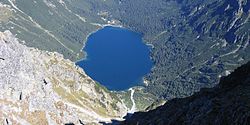
Review it! (edit) |
Nominated by:
Gower (talk) on 2025-11-18 19:33 (UTC) |
Scope:
Category:Morskie Oko |
Reason:
Morskie Oko is a major tourist attraction in Poland and the second-largest lake in the Tatra Mountains, the highest Polish mountains. That image (author: Tomasz O.) isn't perfect (small resolution), but as only one on Commons shows real shape of that lake, because photo was taken from mountain pass over the lake (and sadly it's probably only photo from that pass, also big tourist attraction). Another good picture is that one, but from different perspective: File:Panorama-Morskiego-Oka.jpg. -- Gower (talk) |
| Open for review. |
|
|


.tif/lossless-page1-160px-Bike_Santiago-Plaza_de_Armas_(cropped).tif.png)


_Dysmachus_trigonus_on_Dianthus_caryophyllus.jpg)
_Petit_sarcophage_IVe-Ve_siècle_apr.J.-C._-_Hypogée_de_Lagrange.jpg)

._Аграрний_ліцей.jpg)
._Сільрада.jpg)
_-_2025-09-28_19-45-57_001.jpg)
_Place_Louis_Blanc_-_ancienne_entrée_du_musée_des_Jacobins.jpg)


_Vase_-_Personnage_assis_en_tailleur_-_Musée_des_Amériques_-_Auch.jpg)
.jpg)
.jpg)


_-.jpg)


_Tricao.jpg)
_on_nest_Chiloe.jpg)
_in_flight_Laguna_Nimez.jpg)
_10.jpg)

_Place_de_la_Libération_vue_depuis_la_Mairie.jpg)
_Brunnera_macrophylla_%27Jack_Frost%27_-_leaf.jpg)
_Buste_de_Jeune_fille_par_Eugène_Antoine_Aizelin_-_Musée_des_Amériques_–_Auch.jpg)


.jpg)
.jpg)


_Chœur_de_la_cathédrale_d%27Auch_-_Reliquaire_de_St_Léotade.jpg)
_Acrotère_Ie_siècle_ap.J.C_-_Musée_des_Amériques_-_Auch.jpg)
_Bouteille_à_col_décor_zoomorphe_Culture_lambayeque_-_Pérou.jpg)

._Контора_цукрозаводу.jpg)

_male_Colonia.jpg)
_female_Colonia.jpg)
_female_in_flight_Colonia.jpg)
_Collège_Sainte-Marie_-_Impasse_Jérôme_Cuzin_à_Auch.jpg)
_Trois_Chaouabtis,_3e_période_intermédiaire_-_Musée_des_Amériques_-_Auch.jpg)
_La_Jeunesse_par_Antonin_Carlès_-_Musée_des_Amériques_–_Auch.jpg)


.jpg)


_Meidling.jpg)


.jpg)


_Rio_Napo.jpg)


_female_feeding_on_wild_papaya_with_male_Orange_Walk.jpg)
_on_wild_papaya_Orange_Walk.jpg)
_feeding_on_madre_cacao_(Gliricidia)_Orange_Walk.jpg)

_on_nikau_(Rhopalostylis_sapida)_Waitakere.jpg)
_pair_feeding_on_jade_vine_(Strongylodon_macrobotrys)_Colo-I-Suva.jpg)
_on_octopus_tree_(Heptapleurum_actinophyllum)_Colo-I-Suva.jpg)


_Enoplognatha_ovata_female_on_Holcus_lanatus.jpg)
_Enoplognatha_ovata_on_Daucus_carota.jpg)
_Misumena_vatia_and_Syrphus_ribesii_on_Hypericum_perforatum.jpg)
_Synema_globosum_on_Knautia_arvensis.jpg)
_Pisaura_mirabilis_male_on_carpinus_betulus.jpg)
_Pisaura_mirabilis_on_Geranium_robertianum.jpg)
_Phalangium_opilio_female_on_Buxus_sempervirens.jpg)
_Oxyopes_lineatus_sur_Santolina_chamaecyparissus.jpg)
_Xysticus_cristatus_on_Leucanthemum_vulgare.jpg)
_Tetragnatha_extensa_on_Philadelphus_coronarius.jpg)
_Thomisus_onustus_eating_Eristalis_tenax_on_Knautia_integrifolia.jpg)
_Heterotheridion_nigrovariegatum_on_Cirsium_palustre.jpg)
_Nymphe_de_Phaneroptera_falcata_sur_Calendula_officinalis.jpg)
_Uromenus_rugosicollis_(Ephippigère_carénée)_male_-_Portrait.jpg)
_Valgus_hemipterus_on_Knautia_arvensis_-_Villeneuve-les-Bouloc_France.jpg)
_Coccinella_septempunctata_(pupa)_on_Xanthium_orientale.jpg)
_Oedemera_nobilis_male_on_Anacamptis_pyramidalis.jpg)
_Tropinota_squalida_on_Silene_dioica.jpg)
_Trichius_gallicus_on_Rosa_canina.jpg)
_Tropinota_squalida_on_Rosa_chinensis.jpg)
_Rhagonycha_fulva_on_Achillea_millefolium.jpg)
_Trichodes_alvearius_on_Achillea_millefolium.jpg)
_Bruchus_rufimanus_on_Euphorbia_flavicoma.jpg)
_Stictoleptura_cordigera.jpg)
_Mesosa_nebulosa_latéral_view_on_Yucca_gloriosa.jpg)
_Stenurella_melanura_on_Rubus_ulmifolius.jpg)
_Stictoleptura_cordigera_on_Rubus_plicatus.jpg)
_Rutpela_maculata_on_Carpinus_betulus.jpg)
_Propylea_quatuordecimpunctata_on_Hypericum_perforatum.jpg)
_Rhinocyllus_conicus_on_Cirsium_arvense.jpg)
_female_on_common_valerian_(Valeriana_officinalis)_Ruggeller_Riet.jpg)
_Stenurella_bifasciata_mating_on_Oenanthe_pimpinelloides.jpg)
_Psilothrix_viridicoerulea_on_Echium_plantagineum.jpg)
_Oedemera_nobilis_female_on_Rubus_ulmifolius.jpg)
_Rutpela_(ex-Stenurella)_nigra_on_Senecio_squalidus.jpg)
_Halictus_rubicundus_on_Knautia_arvensi_-_Villeneuve-les-Bouloc_France.jpg)
_Halictus_rubicundus_on_Jacobaea_vulgaris_-_Villeneuve-les-Bouloc_France.jpg)

_Cerceris_rybyensis_dorsal_view_on_Tordylium_maximum.jpg)

_Adscita_statices_on_Senecio_squalidus.jpg)
_2.jpg)
_on_thistle_Babadag.jpg)
_Sphaerophoria_scripta_on_Viburnum_tinus.jpg)
_Gymnosoma_nudifrons_on_Viburnum_tinus.jpg)
_Tipula_paludosa_on_Iris_leave.jpg)
_Tipula_paludosa_on_viburnum_tinus_leave.jpg)
_Gymnosoma_nudifrons_on_Viburnum_tinus_-_Portrait.jpg)
_Ectophasia_crassipennis_on_Ammis_majus.jpg)
_Anthomyia_procellaris_on_Rubus_caesius.jpg)
_Sphaerophoria_scripta_female_on_Dasiphora_fruticosa.jpg)
_Rhagio_lineola_up_view_on_Rubus_ulmifolius.jpg)
_Rhagio_tringarius_side_view_on_Geum_urbanum.jpg)
_Hybos_culiciformis_on_Geranium_robertianum.jpg)
_Tipula_lunata_male_on_Lapsana_communis.jpg)
_Xyphosia_miliaria_on_Cirsium_arvense.jpg)
_Neotephritis_finalis_dorsal_view_on_Viburnum_tinus.jpg)

_Oedemera_nobilis_female_on_Anacamptis_pyramidalis.jpg)
_Reduvius_personatus_on_Dasiphora_fruticosa.jpg)
_Reduvius_personatus_on_Dasiphora_fruticosa_-_Profil.jpg)
_Ancyrosoma_leucogrammes_on_Chaerophyllum_aureum.jpg)
_Eysarcoris_venustissimus_on_Alchemilla_mollis.jpg)
_Deraeocoris_olivaceus_on_Rubus_ulmifolius.jpg)
_Coreus_marginatus_on_Cirsium_arvense.jpg)
_Adelphocoris_lineolatus_on_Bryonia_cretica.jpg)
_Micromus_angulatus_on_Daucus_carota.jpg)


_Dysmachus_trigonus_on_Dianthus_caryophyllus.jpg)
_Dysmachus_trigonus_on_Dianthus_caryophyllus.jpg&action=edit)
_Petit_sarcophage_IVe-Ve_siècle_apr.J.-C._-_Hypogée_de_Lagrange.jpg)
_Petit_sarcophage_IVe-Ve_si%C3%A8cle_apr.J.-C._-_Hypog%C3%A9e_de_Lagrange.jpg&action=edit)


._Аграрний_ліцей.jpg)
._%D0%90%D0%B3%D1%80%D0%B0%D1%80%D0%BD%D0%B8%D0%B9_%D0%BB%D1%96%D1%86%D0%B5%D0%B9.jpg&action=edit)
._Сільрада.jpg)
._%D0%A1%D1%96%D0%BB%D1%8C%D1%80%D0%B0%D0%B4%D0%B0.jpg&action=edit)
_-_2025-09-28_19-45-57_001.jpg)
_-_2025-09-28_19-45-57_001.jpg&action=edit)
_Place_Louis_Blanc_-_ancienne_entrée_du_musée_des_Jacobins.jpg)
_Place_Louis_Blanc_-_ancienne_entr%C3%A9e_du_mus%C3%A9e_des_Jacobins.jpg&action=edit)


_Vase_-_Personnage_assis_en_tailleur_-_Musée_des_Amériques_-_Auch.jpg)
_Vase_-_Personnage_assis_en_tailleur_-_Mus%C3%A9e_des_Am%C3%A9riques_-_Auch.jpg&action=edit)
.jpg)
.jpg&action=edit)
.jpg)
.jpg&action=edit)


_-.jpg)
_-.jpg&action=edit)


_Tricao.jpg)
_Tricao.jpg&action=edit)
_on_nest_Chiloe.jpg)
_on_nest_Chiloe.jpg&action=edit)
_in_flight_Laguna_Nimez.jpg)
_in_flight_Laguna_Nimez.jpg&action=edit)
_10.jpg)
_10.jpg&action=edit)


_Place_de_la_Libération_vue_depuis_la_Mairie.jpg)
_Place_de_la_Lib%C3%A9ration_vue_depuis_la_Mairie.jpg&action=edit)
_Brunnera_macrophylla_%27Jack_Frost%27_-_leaf.jpg)
_Brunnera_macrophylla_%27Jack_Frost%27_-_leaf.jpg&action=edit)
_Buste_de_Jeune_fille_par_Eugène_Antoine_Aizelin_-_Musée_des_Amériques_–_Auch.jpg)
_Buste_de_Jeune_fille_par_Eug%C3%A8ne_Antoine_Aizelin_-_Mus%C3%A9e_des_Am%C3%A9riques_%E2%80%93_Auch.jpg&action=edit)


.jpg)
.jpg&action=edit)
.jpg)
.jpg&action=edit)


_Chœur_de_la_cathédrale_d%27Auch_-_Reliquaire_de_St_Léotade.jpg)
_Ch%C5%93ur_de_la_cath%C3%A9drale_d%27Auch_-_Reliquaire_de_St_L%C3%A9otade.jpg&action=edit)
_Chœur_de_la_cathédrale_d%27Auch_-_Reliquaire_de_St_Austinde.jpg)
_Acrotère_Ie_siècle_ap.J.C_-_Musée_des_Amériques_-_Auch.jpg)
_Acrot%C3%A8re_Ie_si%C3%A8cle_ap.J.C_-_Mus%C3%A9e_des_Am%C3%A9riques_-_Auch.jpg&action=edit)
_Bouteille_à_col_décor_zoomorphe_Culture_lambayeque_-_Pérou.jpg)
_Bouteille_%C3%A0_col_d%C3%A9cor_zoomorphe_Culture_lambayeque_-_P%C3%A9rou.jpg&action=edit)


,_wingless_female_(10924016446).jpg)

._Контора_цукрозаводу.jpg)
._%D0%9A%D0%BE%D0%BD%D1%82%D0%BE%D1%80%D0%B0_%D1%86%D1%83%D0%BA%D1%80%D0%BE%D0%B7%D0%B0%D0%B2%D0%BE%D0%B4%D1%83.jpg&action=edit)


_male_Colonia.jpg)
_male_Colonia.jpg&action=edit)
_female_Colonia.jpg)
_female_Colonia.jpg&action=edit)
_female.JPG)

_female_in_flight_Colonia.jpg)
_female_in_flight_Colonia.jpg&action=edit)
_Collège_Sainte-Marie_-_Impasse_Jérôme_Cuzin_à_Auch.jpg)
_Coll%C3%A8ge_Sainte-Marie_-_Impasse_J%C3%A9r%C3%B4me_Cuzin_%C3%A0_Auch.jpg&action=edit)
_Trois_Chaouabtis,_3e_période_intermédiaire_-_Musée_des_Amériques_-_Auch.jpg)
_Trois_Chaouabtis,_3e_p%C3%A9riode_interm%C3%A9diaire_-_Mus%C3%A9e_des_Am%C3%A9riques_-_Auch.jpg&action=edit)
_La_Jeunesse_par_Antonin_Carlès_-_Musée_des_Amériques_–_Auch.jpg)
_La_Jeunesse_par_Antonin_Carl%C3%A8s_-_Mus%C3%A9e_des_Am%C3%A9riques_%E2%80%93_Auch.jpg&action=edit)


.jpg)
.jpg&action=edit)


.jpg)


_Meidling.jpg)
_Meidling.jpg&action=edit)


.jpg)
.jpg&action=edit)


_Rio_Napo.jpg)
_Rio_Napo.jpg&action=edit)


